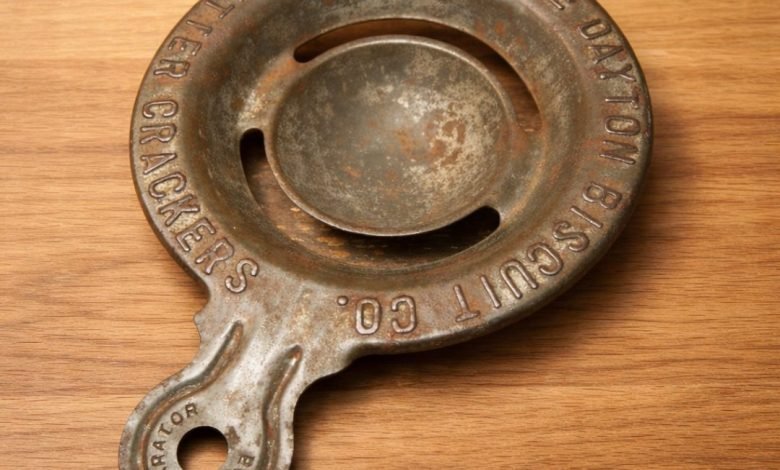

What It Is Called
- Name: Vintage Metal Egg Separator
- Common description: Handheld egg yolk/white separator
- Typical construction: Cast metal (often aluminum or similar alloys) with a shallow cup and drain slots
Key Identifying Details From the Item
- Many examples, like the one shown, were cast with maker markings such as:
- “THE ORIGINAL”
- Company name (e.g., “CRACKERS CO.”)
- Location (e.g., “BURLINGTON”)
- “USA”
- These raised markings served as branding and helped buyers recognize a “standard” or “original” version in an era before modern packaging and mass advertising.
When It First Appeared
- While cooks have separated eggs for centuries using shells, purpose-built separators became common with the spread of home baking and printed recipes.
- Late 1800s to early 1900s: Egg-separating devices began appearing as dedicated kitchen tools, supported by a wave of practical household inventions.
- Early–mid 20th century: Metal, one-piece separators like this became especially popular because they were durable, washable, and inexpensive to manufacture.
Who Created It
- Not a single inventor: The egg separator concept evolved through multiple inventors and manufacturers over time.
- Who made this specific style: Tools like the one pictured were typically produced by regional U.S. kitchenware manufacturers, and the cast-in wording indicates the maker and location (for example, a firm labeled “CRACKERS CO.” with “BURLINGTON, USA”).
- In practice, the “creator” of a particular separator is usually the company named on the tool, rather than one famous individual.
What It Was Used For
- Primary purpose: Separating egg whites from egg yolks cleanly and quickly.
- Why it mattered: Many classic recipes require:
- Whites only (meringue, angel food cake, macarons, soufflés)
- Yolks only (custards, mayonnaise, hollandaise, rich cakes)
How It Works
- Crack the egg and pour it into the center cup.
- The egg white drains through the side slots.
- The yolk remains in the cup, held back by the separator’s shape.
- Pour the yolk into a separate bowl.
Why Vintage Metal Separators Were Popular
- Durability: One-piece metal construction resisted cracking and warping.
- Speed: Faster than passing yolk between shells, especially when separating many eggs.
- Consistency: The slots controlled flow, reducing yolk breakage when used carefully.
- Hygiene for the time: Easier to wash than porous materials and designed for repeated daily use.
Collector and Practical Value Today
- Collectors value these tools for:
- Raised lettering and regional maker marks
- Industrial, utilitarian design
- Connection to early American home cooking
- In a modern kitchen, it can still be used effectively, though many cooks now choose stainless steel versions for a similar function.
Bottom Line
- The vintage metal egg separator is a straightforward but important kitchen innovation: a dedicated tool designed to make baking and cooking more reliable, reflecting the era when household gadgets were built to be simple, sturdy, and practical.